More Than a Label: How Hasan Redefined Ability in Poso
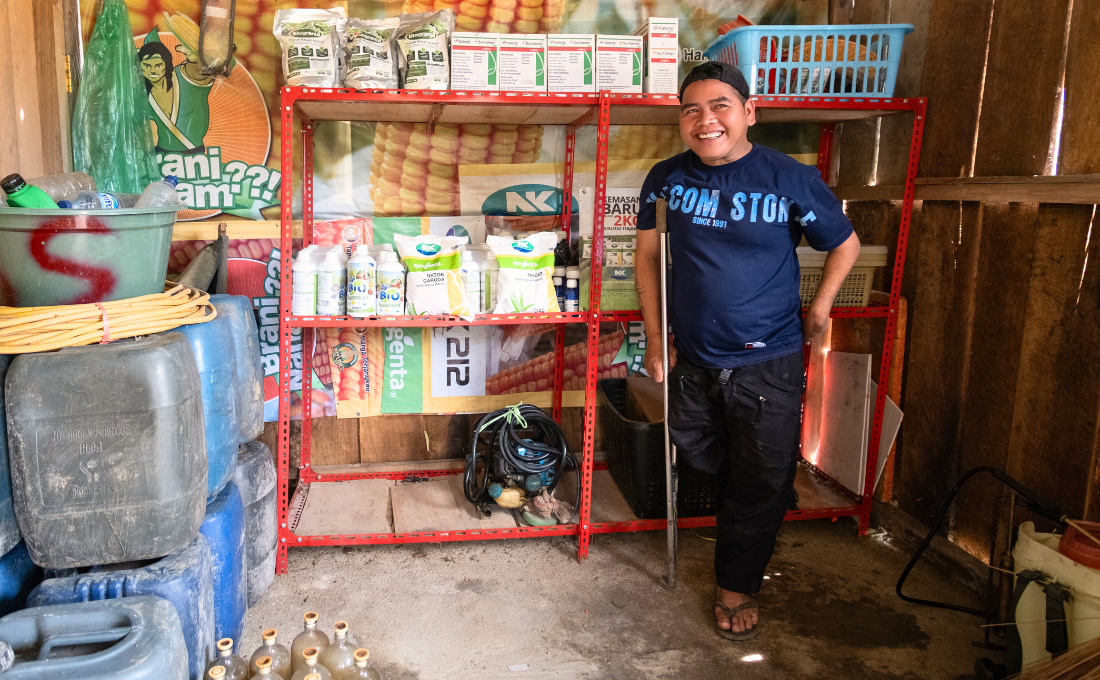
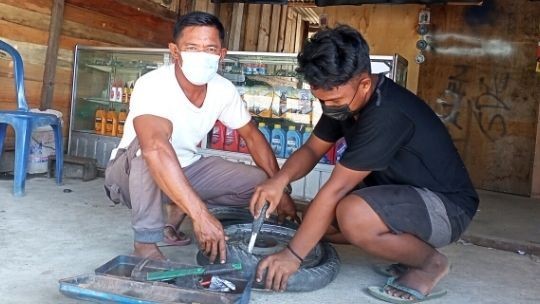
Born different, with mobility impairments, Hasan has never let his physical condition hinder his creativity or his pursuit of his dreams. From his teenage years to the present day, he has always striven for independence. This young man from Poso Regency even worked as a motorcycle taxi driver in the city before he was married. Today, he does more than just farm for himself; Hasan encourages fellow persons with disabilities to form groups, learn proper farming techniques, and manage land together.
Empowering farmers with disabilities is no easy feat. Many face communication barriers. Reaching an agreement to work together in the fields the following day—for tasks such as planting, clearing weeds or dry leaves, and spraying pesticides—is a significant challenge. The day before any activity, Hasan must gather the group of farmers he mentors. The Village Midwife is one of the key figures who helps bridge the communication gap with his peers. Aligning the voices of 20 group members is a constant test. Hasan’s method for reaching these agreements is rooted in collaboration with those they already trust.
Hasan is passionate and bold in encouraging residents to grow maize, a confidence born from personal experience. “I’ve been planting maize since 2005, back when the price was only 500 rupiah per kilo. My spirit did flag at one point because my last harvest only yielded 600 kilos from one hectare. What could I achieve with that? I’d only end up in debt if I tried to plant again,” he explained, reflecting on the past. What reignited the passion of the man affectionately known as Bapa Nadia (Nadia’s Father) was the recent surge in yields. After switching to high-quality hybrid seeds, his harvest increased dramatically, reaching as much as 10 tonnes.
With such results, Hasan has not only been able to pay off his debts but also realise his dream of building a decent home for his small family. For Hasan, owning this house is more than just having a place for shelter; it is a testament to the world. As a person with a disability, he feels his independence is often questioned. He is deeply driven to shatter the perception that disability inevitably leads to total dependence on others.
In addition to farming, Hasan owns and manages a small shop (kios) located about 300 metres from his home. The shop sells daily household necessities as well as agricultural supplies such as seeds, fertilisers, and pesticides. He runs the business alongside his wife. While his wife and child spend most of their time at the shop, Hasan and his friends are out in the fields. In the evening, he collects his wife and child from the shop so they can return home together.
“Beyond the house, my dreams are to expand the shop and build a small place of worship,” Hasan shared. His current shop has an interesting backstory. Initially, Hasan was a user of seeds from PT Syngenta. His success with these seeds inspired many other farmers to find the "courage" to return to maize farming. After years of using local seeds that were deemed less profitable, people began flocking back to the crop.
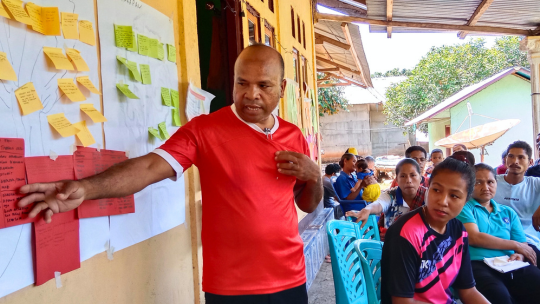
Hasan gained this new experience in maize farming after Wahana Visi Indonesia (WVI) implemented the INCLUSION project in his village. INCLUSION is a programme aimed at opening market access for farmers by prioritising inclusivity and building partnerships. Consequently, private sector players like PT Syngenta are involved in the project.
Given the rising demand for maize seeds in Hasan’s village, PT Syngenta entrusted him with the sale of their seeds. This is a source of great pride for Hasan. Out of many non-disabled farmers, the company chose him. “I am happy because with Wahana Visi Indonesia and Syngenta, we aren’t just talking about business or agriculture. There is humanity in it. I am certain I wasn't chosen out of pity. I have worked hard to show the responsibility required to earn this level of trust,” Hasan said proudly.
Hasan is right; few people receive such significant capital trust from parties who were initially strangers. Once again, Hasan has proven that success and trustworthiness are not based on physical attributes alone. After working through this process for approximately two years, several members of the disabled farmers' group in his village have begun to earn the trust of their families to manage land.
For a long time, land management within families was often handed solely to non-disabled children. People with disabilities were deemed incapable of working the fields. If this persists, society unconsciously creates the very lack of independence it criticises. Through the mentoring provided by WVI, the acquisition of farming skills—particularly regarding maize—has not only improved agricultural yields but also strengthened the independence of disabled farmers in Poso Regency.
Author: Dian Purnomo (Writer and researcher, INCLUSION project consultant)
Editor: Mariana Kurniawati (Communication Executive)